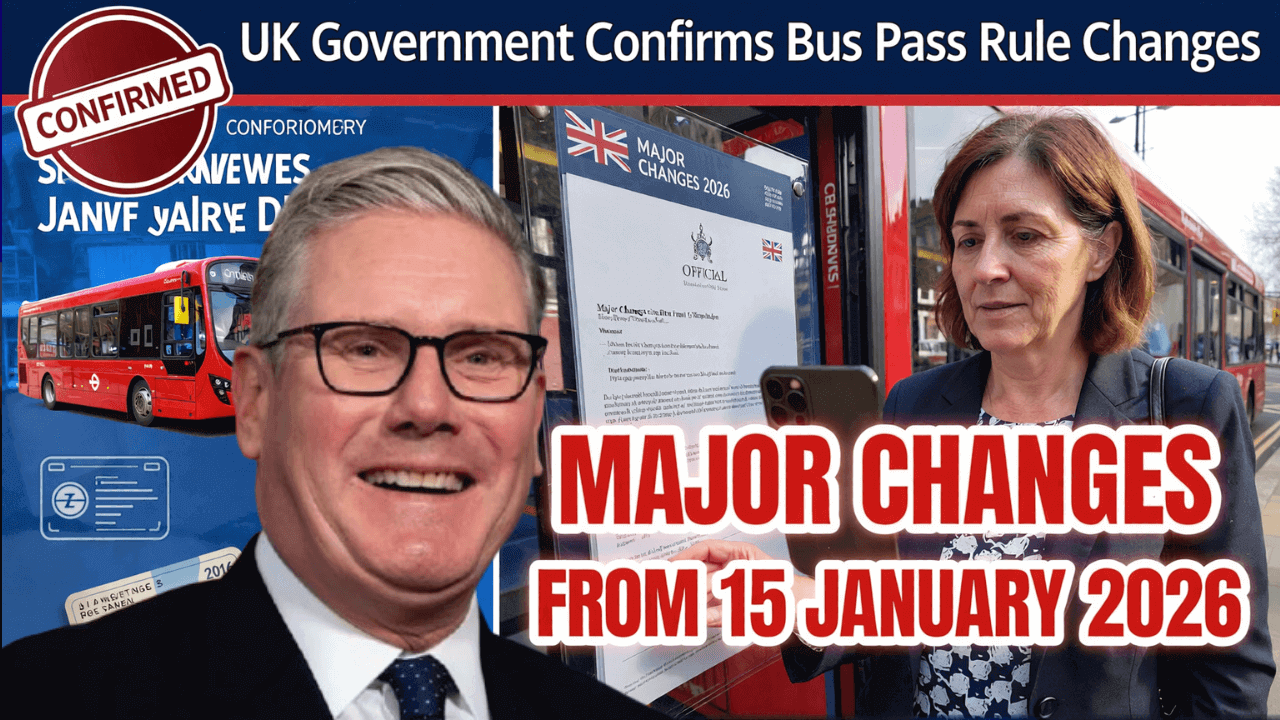
The UK government has officially confirmed major changes to bus pass rules that will take effect from 15 January 2026, impacting millions of older and disabled passengers across the country. The announcement has sparked widespread interest and concern, particularly among those who rely on concessionary travel for daily independence, medical appointments and access to essential services.
Bus passes remain one of the most widely used benefits for pensioners and disabled people, offering free or discounted travel during off‑peak hours. Any change to how these passes operate can therefore have a significant effect on daily routines and financial planning. The government says the updated rules are designed to modernise the system and improve consistency, while critics warn that clarity and communication will be essential to avoid confusion.
This article explains what the government has confirmed, what is changing from 15 January 2026, who is most likely to be affected, and what current bus pass holders should know to prepare.
Why the government is changing bus pass rules
The government says the changes form part of a broader review of concessionary travel schemes across England. Rising public transport costs, changing travel patterns since the pandemic and pressure on local authority budgets have all contributed to the decision.
Officials argue that updating the rules will help ensure the long‑term sustainability of free bus travel while continuing to protect those who depend on it most.
What has been officially confirmed
The government has confirmed that revised bus pass rules will come into force on 15 January 2026. These changes relate mainly to how passes are used, verified and administered, rather than removing entitlement altogether.
Existing passes will remain valid, but certain conditions attached to their use may change depending on local council implementation.
Why the 15 January 2026 date matters
Setting a clear start date allows councils and transport providers time to update systems and inform passengers. For pass holders, it creates a clear deadline to check whether any local changes apply to them.
Journeys made on or after 15 January 2026 will fall under the updated rules.
Who will be affected by the changes
The changes primarily affect people who hold older persons’ bus passes and disabled persons’ bus passes. This includes individuals who have reached State Pension age and those with qualifying disabilities.
The exact impact may vary depending on where someone lives, as councils retain a degree of flexibility.
What is not changing under the new rules
The government has stressed that free bus travel for eligible passengers is not being scrapped. Entitlement to concessionary travel remains in place.
The focus of the changes is on consistency, administration and security rather than removing benefits.
Why there is confusion among passengers
Bus pass rules already differ between regions, leading to confusion when national announcements are made. Some passengers assume changes apply uniformly across the UK, when in reality councils can apply local conditions.
The government has urged people to check local guidance rather than relying on general headlines.
Possible changes to travel times
One area affected by the update is the timing of when bus passes can be used. While off‑peak travel remains standard, some councils may adjust local restrictions or clarify existing ones.
Passengers should check whether morning or evening peak‑time limits apply in their area.
The role of local councils
Although funded nationally, bus passes are administered by local councils. This means councils are responsible for implementing changes, issuing passes and communicating with residents.
As a result, experiences may differ slightly between areas.
Why councils support the update
Many councils say the changes will help reduce misuse and improve fairness. Clearer rules and verification processes are intended to protect the scheme for genuine users.
Councils also face pressure to manage transport budgets responsibly.
How disabled passengers may be affected
Disabled bus pass holders may see changes related to verification or renewal rather than travel rights. The government says protections for disabled people remain a priority.
No blanket removal of disability entitlements has been announced.
What older passengers should know
Older passengers should ensure their personal details and pass information are up to date. Changes to renewal or verification processes could affect access if details are incorrect.
Checking council letters and websites is advised.
Are eligibility ages changing
The government has confirmed that eligibility ages linked to State Pension age are not being abruptly changed as part of this update. However, future reviews remain possible.
This offers reassurance to those nearing eligibility.
Why some people may need to re‑check their pass
Some pass holders may be asked to confirm eligibility details or renew earlier than expected. This does not apply to everyone, but awareness is important.
Ignoring renewal notices could result in temporary disruption.
The importance of official communication
Officials have warned against relying on social media rumours. Misinformation can spread quickly and cause unnecessary worry.
Council letters and official websites remain the most reliable sources.
Scam warnings linked to rule changes
Whenever benefit rules change, scammers often target vulnerable people. Fake messages claiming to “update” bus passes are a known risk.
Passengers should never share personal or bank details unless contacting their council directly.
What the government says about fraud prevention
The government says part of the update focuses on protecting the system from fraud. Improved verification is intended to safeguard legitimate users rather than restrict access.
Security and fairness are cited as key goals.
How bus operators are preparing
Bus companies are working with councils to update systems and train drivers ahead of January 2026. This is intended to minimise disruption.
Some initial confusion may still occur during the transition period.
Why January is often chosen for changes
January is commonly used for policy updates because it aligns with planning cycles and budget considerations. However, it can be a challenging time for passengers.
Clear guidance is therefore essential.
What passengers should do before 15 January 2026
Passengers are advised to check their pass expiry date, read any council correspondence and visit official council websites for updates.
A few minutes of preparation can prevent problems later.
What happens if a pass stops working
If a pass fails to scan after the change, passengers should contact their local council rather than the bus operator. Councils handle pass administration.
Issues are usually resolved once reported.
Why the scheme remains vital
For many people, free or discounted bus travel is essential for independence, social contact and access to healthcare. The government acknowledges its importance.
Maintaining confidence in the scheme is crucial.
How the changes fit into wider transport policy
The update forms part of broader efforts to support public transport while managing costs. Encouraging bus use remains a government priority.
Concessionary travel supports this goal.
Why many people may notice no difference
In practice, many passengers may experience no noticeable change. For them, journeys will continue as usual.
The impact depends largely on local implementation.
What campaigners are watching closely
Campaign groups are monitoring how councils apply the new rules, particularly to ensure vulnerable groups are not disadvantaged.
Any issues are likely to attract public attention.
What happens after the changes take effect
After 15 January 2026, councils will review how the new rules are working. Adjustments may be made if problems emerge.
Passenger feedback will be important.
Why staying informed matters
Understanding the rules reduces anxiety and prevents disruption. Simple awareness can make the transition smoother.
Ignoring updates can lead to avoidable inconvenience.
Key points to remember
The UK government has confirmed major bus pass rule changes starting 15 January 2026. The scheme continues, but some conditions and administrative processes are being updated.
Checking local guidance is essential.
Final thoughts
The confirmation of major bus pass rule changes marks an important moment for millions of concessionary travel users. While headlines may sound alarming, the core benefit remains in place for those who rely on it.
For passengers, the most important step is staying informed through official council channels. With preparation and awareness, most people should continue using their bus passes without difficulty when the new rules take effect in January 2026.